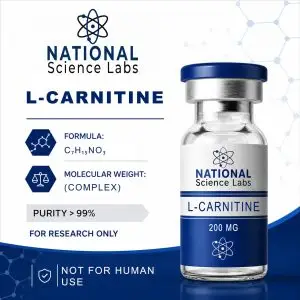
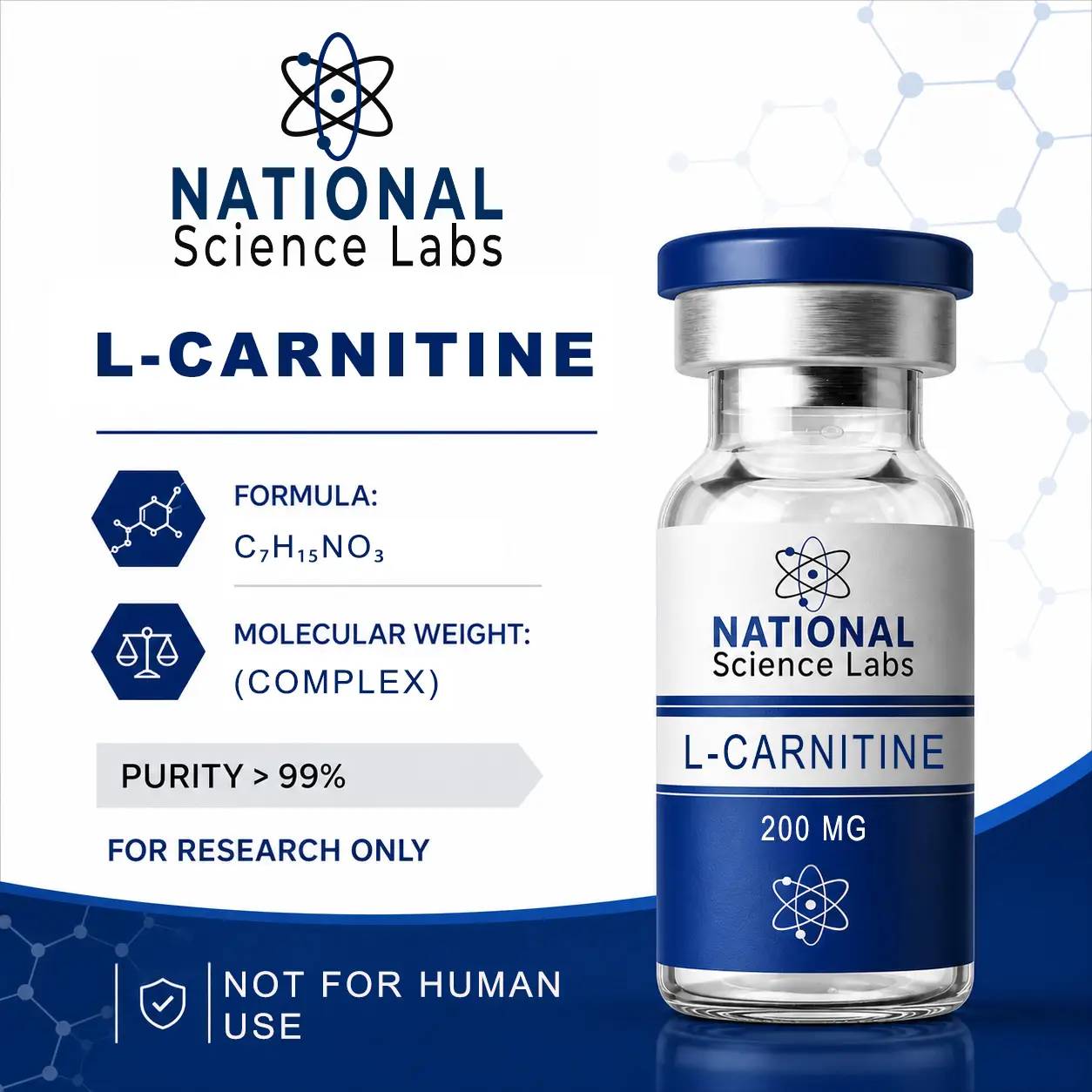
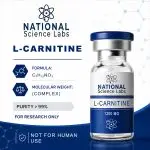
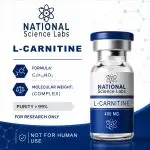
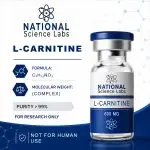
Researchers apply L-Carnitine to investigate its role as the obligate carrier for long-chain fatty acids across the mitochondrial inner membrane via carnitine palmitoyltransferase-1 (CPT-1). Pre-clinical observations in skeletal muscle and hepatic models indicate enhanced beta-oxidation rates, increased ATP production from lipid substrates, and sparing of glycogen during energetic demand.
This amino acid derivative facilitates examination of mitochondrial substrate selection, metabolic flexibility, and responses to exercise or caloric restriction in cellular and whole-organism research paradigms.
Scientific Overview of L-Carnitine Applications
Pre-clinical models demonstrate L-Carnitine’s engagement with mitochondrial and metabolic mechanisms:
- Facilitation of long-chain fatty acid transport into mitochondria through CPT-1, supporting beta-oxidation and ATP generation in muscle and liver tissue systems.
- Enhancement of fat oxidation and metabolic substrate switching during endurance or overload conditions in rodent models.
- Support for post-exercise recovery processes, including reduction of muscle damage markers and oxidative stress in skeletal muscle studies.
- Modulation of energy homeostasis and lipid utilization in models of metabolic challenge or nutrient restriction.
- Examination of carnitine’s cofactor role in maintaining mitochondrial membrane potential and bioenergetic efficiency under stress.
- Contribution to investigations into cardiac energy metabolism and tissue-specific lipid handling in ischemia or deficiency paradigms.
For further details on mitochondrial fatty acid transport, beta-oxidation pathways, and metabolic regulation in pre-clinical research, refer to the Peptide Sciences or About Peptides sections.
Why Investigators Select National Science Labs L-Carnitine
National Science Labs manufactures L-Carnitine under stringent GMP-compliant protocols to ensure batch-to-batch consistency and reliability for pre-clinical experiments. Independent third-party testing verifies each lot for:
- Purity ≥99.9% by HPLC
- Chiral purity confirmation (100% L-enantiomer, no D-form detected)
- Complete Certificate of Analysis (CoA) documentation provided per batch
For Research Use Only. This product is supplied exclusively for in vitro and in vivo pre-clinical research by qualified investigators. Statements about this compound have not been evaluated by the FDA.
Initiate Your L-Carnitine Research Protocol
Source high-purity L-Carnitine from current limited batches to ensure optimal stability and performance in fatty acid transport and energy metabolism studies.