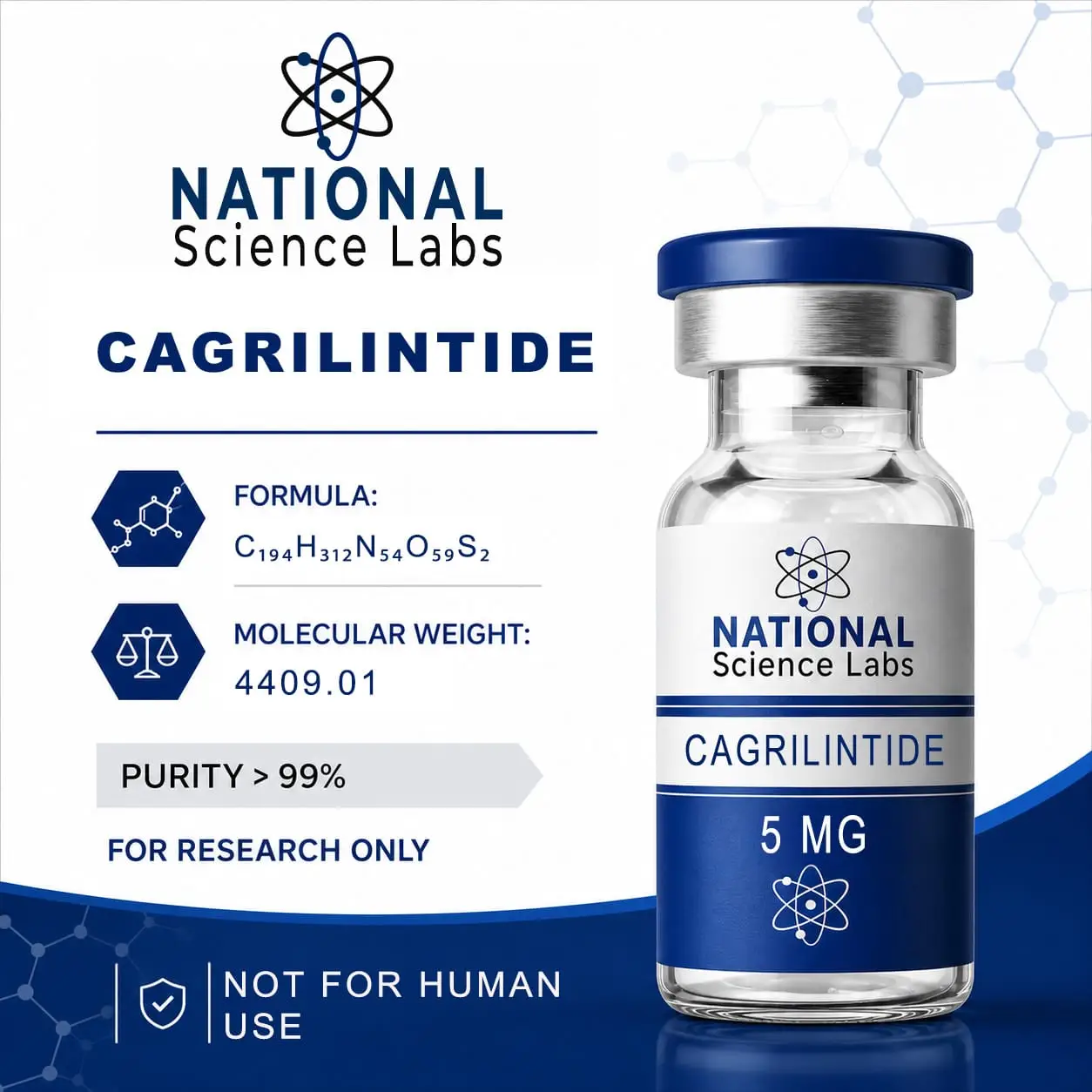
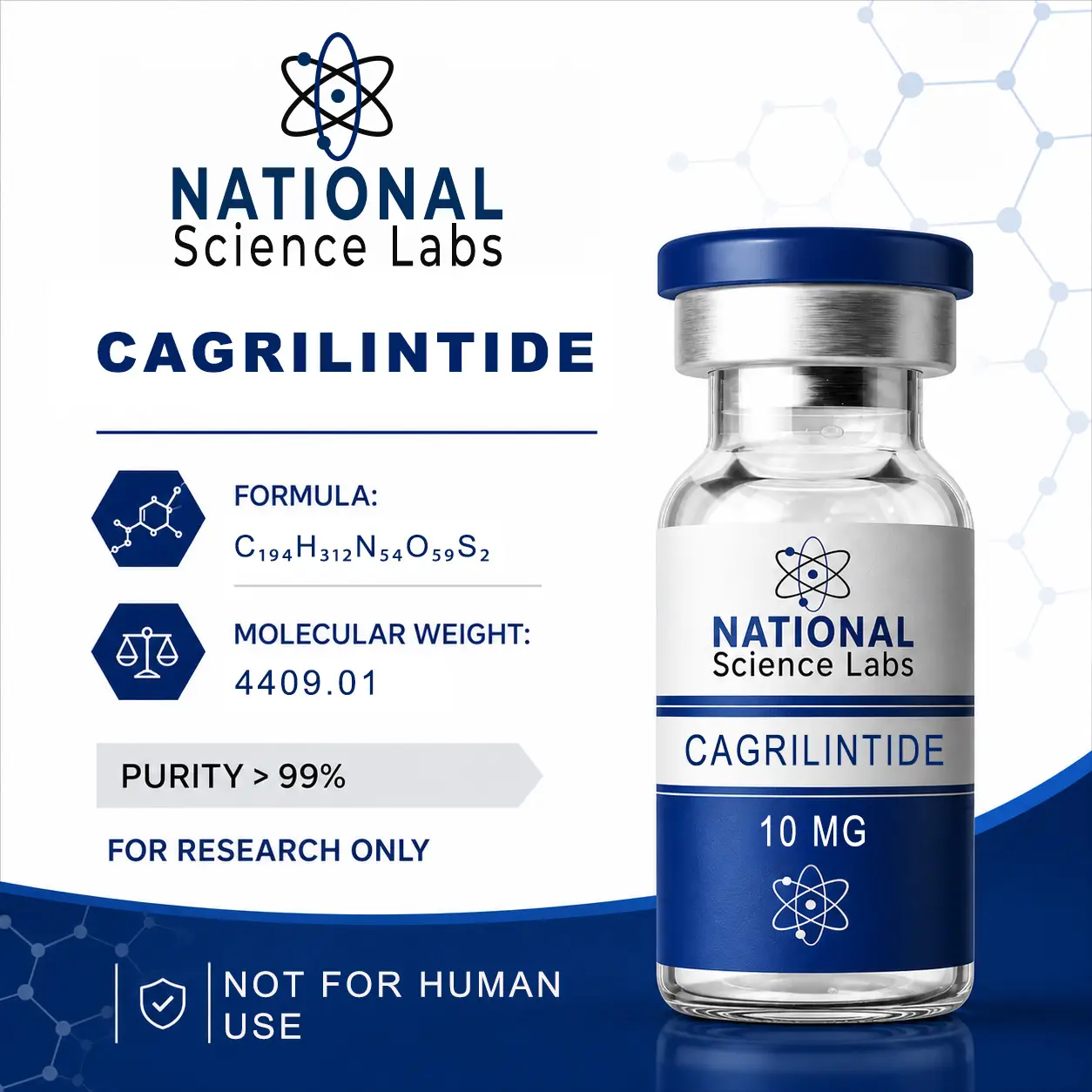


Researchers apply Cagrilintide to investigate its selective activation of calcitonin/amylin receptors in the area postrema and hypothalamus, observing delayed gastric emptying and enhanced satiety signals. Pre-clinical findings in rodent models indicate dose-dependent reduction in food intake and body weight through central and peripheral metabolic coordination.
This lipidated analog facilitates examination of prolonged receptor engagement, synergistic effects with GLP-1 receptor agonists, and modulation of energy homeostasis in metabolic challenge paradigms.
Scientific Overview of Cagrilintide Applications
Pre-clinical models demonstrate Cagrilintide’s engagement with amylin-related mechanisms:
- Activation of amylin receptors leading to delayed gastric emptying and reduced caloric intake in feeding behavior studies. https://pubmed.ncbi.nlm.nih.gov/34798060/
- Enhancement of satiety signaling and metabolic shifts toward fat oxidation in obesity models.
- Modulation of postprandial glucose dynamics and insulin sensitivity through complementary incretin interactions.
- Support for investigations into combination effects with GLP-1 agonists in dual-agonist research paradigms.
- Examination of dose-dependent reductions in body weight and visceral adipose tissue in long-term metabolic studies.
- Contribution to broader studies on energy homeostasis and appetite regulation in preclinical systems.
For further details on amylin receptor agonists, satiety signaling, and metabolic regulation research, refer to the Peptide Sciences or About Peptides sections.
Why Investigators Select National Science Labs Cagrilintide
National Science Labs manufactures Cagrilintide under stringent GMP-compliant protocols to ensure batch-to-batch consistency and reliability for pre-clinical experiments. Independent third-party testing verifies each lot for:
- Purity ≥99.9% by HPLC
- Structural identity confirmation via mass spectrometry
- Complete Certificate of Analysis (CoA) documentation provided per batch
For Research Use Only. This product is supplied exclusively for in vitro and in vivo pre-clinical research by qualified investigators. Statements about this peptide have not been evaluated by the FDA.
Storage & Handling Guidelines
- Store lyophilized Cagrilintide at –4°F (–20°C) for long-term stability in dry, dark conditions to minimize exposure to moisture, light, air, and heat.
- Maintain in a sealed container protected from environmental factors.
- Employ standard laboratory PPE and safety protocols when handling.
Initiate Your Cagrilintide Research Protocol
Source high-purity Cagrilintide from current limited batches to ensure optimal stability and performance in amylin receptor and metabolic regulation studies.
For Research Use Only. Not for human use.