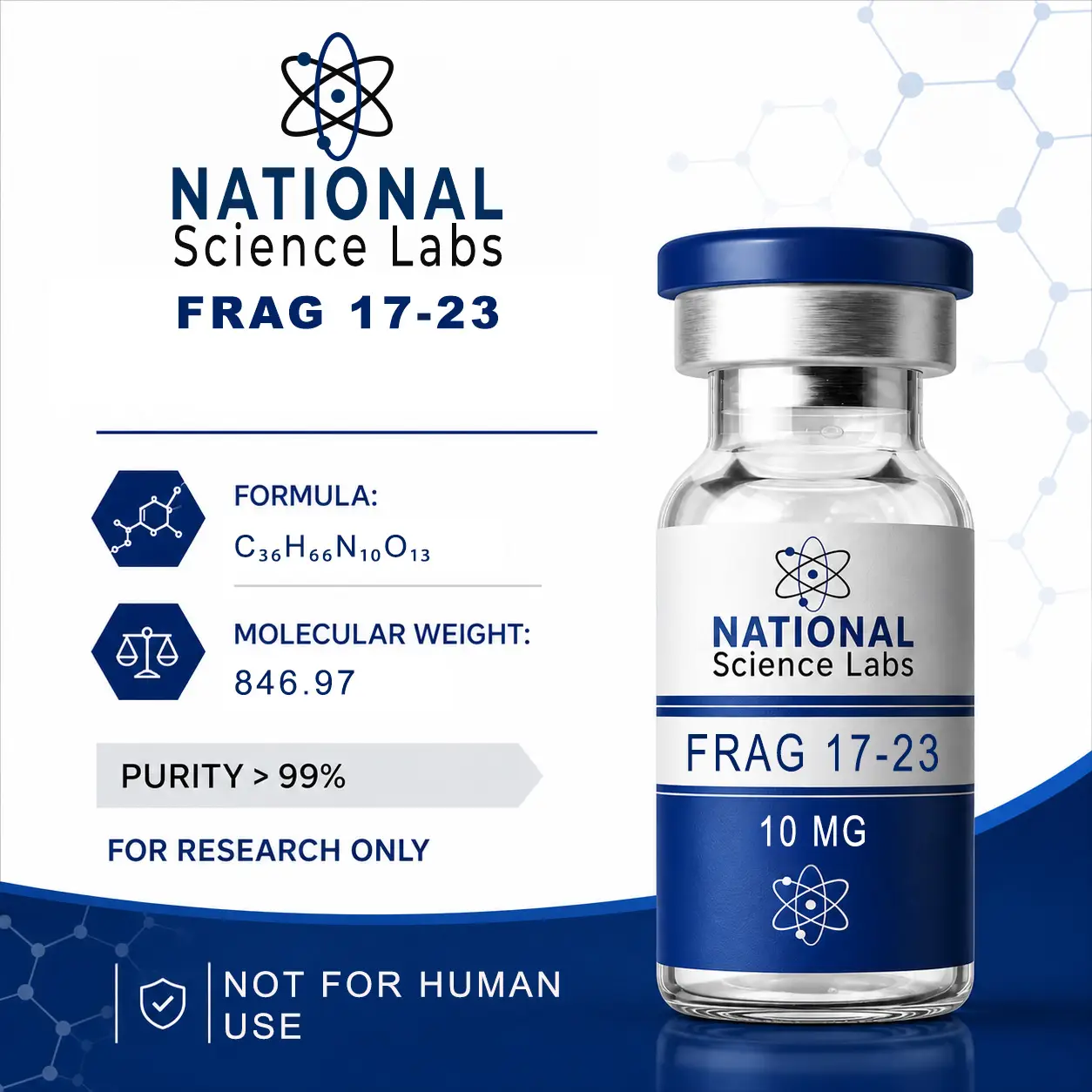
Researchers employ TB-500 Fragment 17-23 to investigate its conserved LKKTETQ motif, which retains actin-binding capability from the parent thymosin beta-4 protein. Pre-clinical observations in cell culture and dermal models indicate modulation of actin polymerization, enhancement of cellular motility, and support for tissue reorganization processes.
This truncated peptide facilitates focused examination of cytoskeletal regulation, angiogenic signaling contributions, and regenerative responses without the full-length protein’s broader interactions.
Scientific Overview of TB-500 Fragment 17-23 Applications
Pre-clinical models demonstrate the fragment’s retention of key functional attributes:
- Binding to actin via the LKKTETQ motif, regulating cytoskeletal dynamics and supporting cell migration in wound healing assays. https://pubmed.ncbi.nlm.nih.gov/10030854/
- Promotion of tissue remodeling through modulation of actin polymerization and cellular reorganization in dermal repair systems.
- Attenuation of inflammatory responses in stress-induced cellular models, contributing to reduced pro-inflammatory signaling.
- Support for angiogenic pathway activation and vascular repair mechanisms in relevant tissue contexts.
- Examination of reduced mast cell activation potential compared to full-length thymosin beta-4 in immune-related studies.
- Investigation of regenerative signaling contributions in musculoskeletal and epithelial injury paradigms.
For further details on thymosin beta-4 fragments, actin-binding peptides, and regenerative mechanisms in pre-clinical research, refer to the Peptide Sciences or About Peptides sections.
Why Investigators Select National Science Labs TB-500 Fragment 17-23
National Science Labs manufactures TB-500 Fragment 17-23 under stringent GMP-compliant protocols to ensure batch-to-batch consistency and reliability for pre-clinical experiments. Independent third-party testing verifies each lot for:
- Purity ≥99.9% by HPLC
- Structural identity confirmation via mass spectrometry
- Complete Certificate of Analysis (CoA) documentation provided per batch
For Research Use Only. This product is supplied exclusively for in vitro and in vivo pre-clinical research by qualified investigators. Statements about this peptide have not been evaluated by the FDA.
Initiate Your TB-500 Fragment 17-23 Research Protocol
Source high-purity TB-500 Fragment 17-23 from current limited batches to ensure optimal stability and performance in actin-binding and tissue remodeling studies.