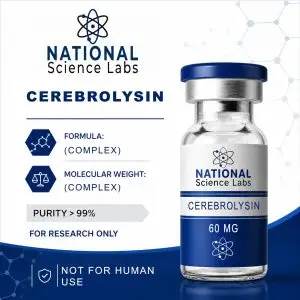
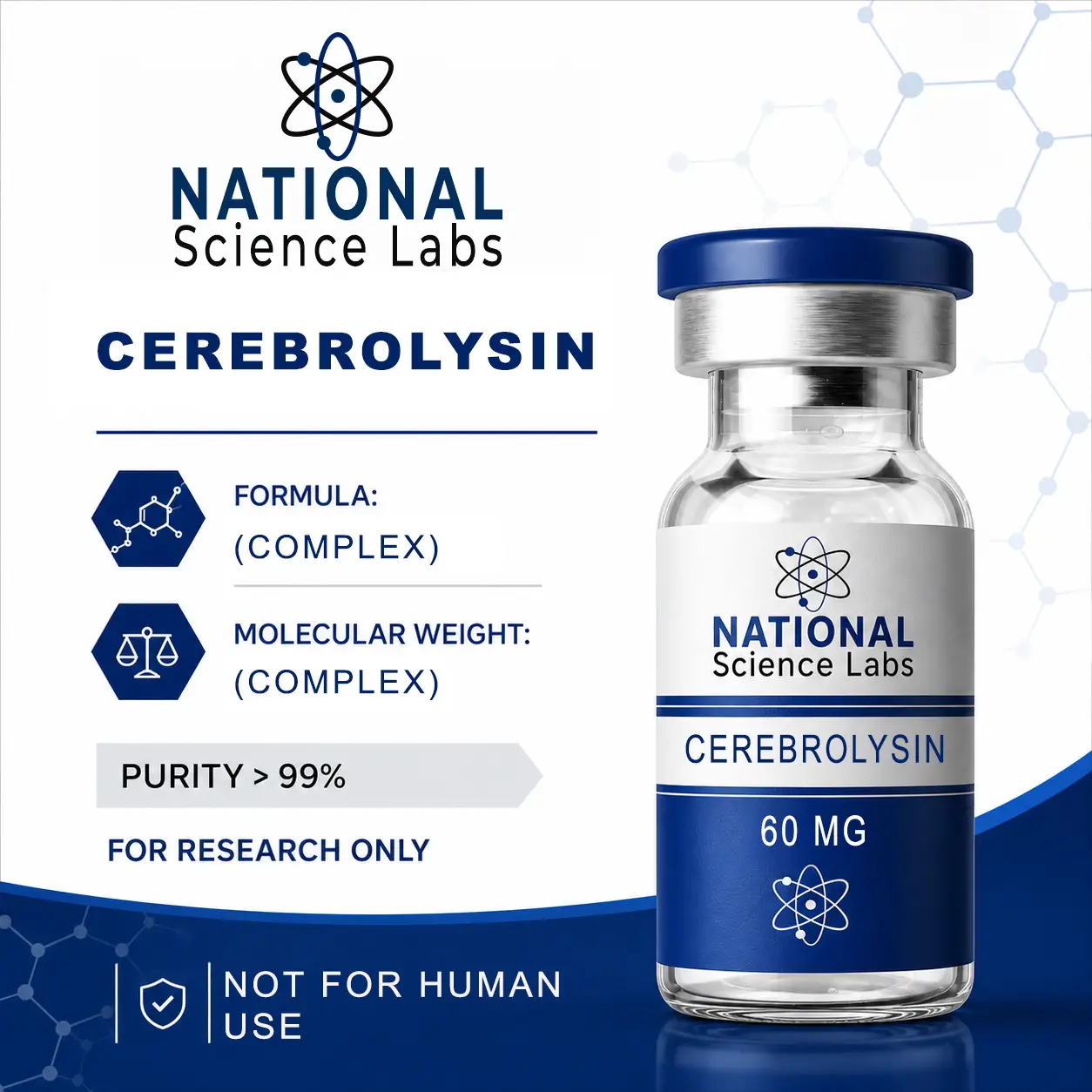

Researchers apply Cerebrolysin to investigate its multifaceted neurotrophic effects, observing promotion of neuronal survival and synaptic protein expression in ischemic and injury models. Pre-clinical findings in rodent stroke and traumatic brain injury systems indicate enhanced functional recovery, reduced apoptotic signaling, and support for neuroplasticity markers.
This peptide complex facilitates examination of brain-specific bioregulatory mechanisms, modulation of cytokine profiles, and adaptive cellular responses to metabolic or oxidative stress.
Scientific Overview of Cerebrolysin Applications
Pre-clinical models demonstrate Cerebrolysin’s engagement with neurotrophic and protective pathways:
- Stimulation of BDNF, NGF, and synaptic protein expression in ischemic brain tissue, supporting neuronal survival and plasticity.
- Reduction of amyloid-β toxicity and tau phosphorylation in models of neurodegenerative pathology.
- Acceleration of functional recovery after traumatic brain injury and spinal cord injury in animal systems.
- Modulation of inflammatory signaling and microglial activation in stress-challenged neural models.
- Support for investigations into metabolic normalization and oxidative balance in aging brain explants.
- Examination of tissue-specific effects on cortical and subcortical recovery mechanisms.
For further details on neurotrophic peptide complexes, neuronal signaling, and neuroregenerative pathways in pre-clinical research, refer to the Peptide Sciences or About Peptides sections.
Why Investigators Select National Science Labs Cerebrolysin
National Science Labs manufactures Cerebrolysin under stringent GMP-compliant protocols to ensure batch-to-batch consistency and reliability for pre-clinical experiments. Independent third-party testing verifies each lot for:
- Purity ≥99% (peptide fraction <10 kDa) by HPLC/SEC
- Compositional identity and neurotrophic activity confirmation
- Complete Certificate of Analysis (CoA) documentation provided per batch
For Research Use Only. This product is supplied exclusively for in vitro and in vivo pre-clinical research by qualified investigators. Statements about this peptide have not been evaluated by the FDA.
Storage & Handling Guidelines
- Store lyophilized Cerebrolysin at –4°F (–20°C) for long-term stability in dry, dark conditions to minimize exposure to moisture, light, air, and heat.
- Maintain in a sealed container protected from environmental factors.
- Employ standard laboratory PPE and safety protocols when handling.
Initiate Your Cerebrolysin Research Protocol
Source high-purity Cerebrolysin from current limited batches to ensure optimal stability and performance in neuroprotection and regeneration studies.
For Research Use Only. Not for human or veterinary use. Not intended to diagnose, treat, cure, or prevent any condition.